1. What should visitors understand at the booth?
Start there, and let it decide everything else. CWMF’s portable silo-system model lets its team point out the arrangement and main features of the equipment without relying on a photograph or drawing alone. (See CWMF Portable System.)
2. How big can it be?
Think about booth space, how it will sit and how many people need to see it. CWMF’s model is 1:20 scale and about 3.5 feet long, which keeps a large piece of equipment at a size a team can bring to events.
3. How will it travel?
Plan for packing from the start. The Carson Group needed three ATM product models with removable sides and interchangeable parts, and we made cases for them. SunPower needed two models of its solar parking structures. We planned them to come apart, with components that could be assembled at the event. (See SunPower.)
4. How will it be set up, over and over?
A model that goes to several events gets packed and set up again and again. For SunPower, transport and repeated setup were as much a part of the job as showing the structures. Tell us how often it will travel and who will set it up.
5. What should it demonstrate?
Removable sides, lighting and cutaways can help your team tell the story. For MagTraC, lighting shows signals moving through the ground toward a receiving tower. (See MagTraC Scientific Drilling.)
6. What happens after the show?
The MagTraC model lives in the company’s lobby between shows. If a model has taken some wear on the road, we also repair and refurbish models. (See model repair and refurbishment.)
7. Where is it going?
We’re based in Denver and ship worldwide, and we can build protective cases for travel and storage. For more on showing large equipment, see our guide to demonstrating large industrial equipment at a trade show and our page on trade show display models.
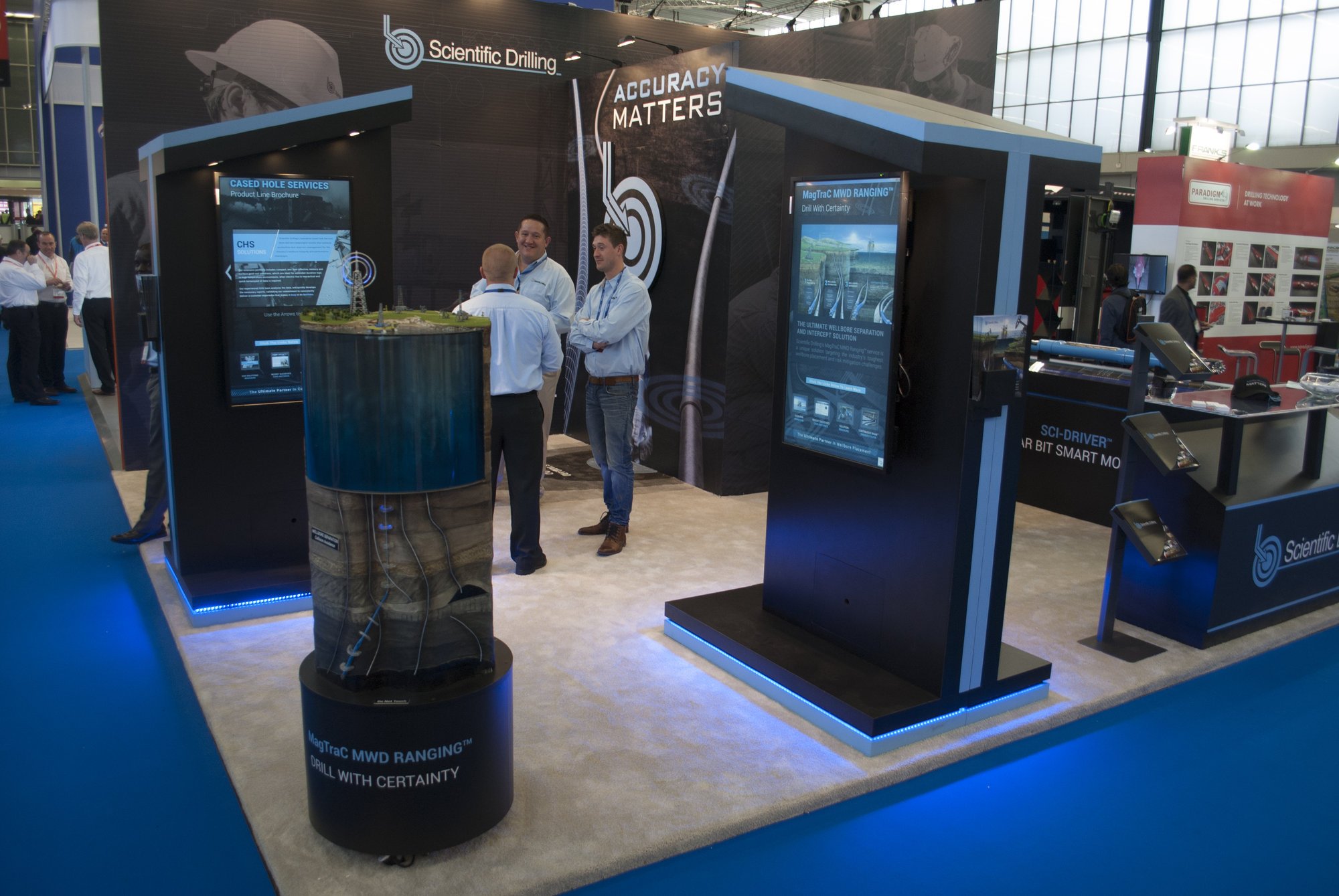
For an example, see our MagTraC Scientific Drilling project. We also have trade show models in the portfolio.