
Show what’s hidden
For a secure data-center campus, the client wanted visitors on tours to see how the buildings and engineering systems fit together, including parts that are usually out of sight. The center of the roof lifts to show systems below, and lighting identifies data streams, server locations and underground fuel tanks. We made custom lighting for those demonstrations. The model measures 76 by 55 inches at 1 inch to 16 feet. (See the Data Center model.)
Westinghouse asked us for a physical engineering model of its eVinci microreactor. A cutaway shows components that are normally hidden, with different colors separating the internal parts. We worked from Westinghouse’s reference images and design information and built it at approximately 1:7 scale on a wheeled display base. (See Westinghouse eVinci Microreactor.)
Show how it works
Scientific Drilling needed a physical demonstration model to explain an underground drilling system at trade shows. We made a circular model with drilling scenes around its sides, and lighting shows signals moving through the ground toward a receiving tower. Between shows, it lives in the company’s lobby. (See MagTraC Scientific Drilling.)
Show it where the equipment can’t go
CWMF makes equipment for asphalt plants and wanted a portable silo system its team could take to trade shows, where the full-size equipment couldn’t go. The model is 1:20 scale, about 3.5 feet long, so the team can point out the arrangement and main features. (See CWMF Portable System.) The U.S. Coast Guard commissioned a detailed waterfront facility model for training, so instructors and students have a shared physical reference during classroom discussions. (See the USCG Training Model.)
Match the model to the audience
An industrial model works best when it’s built around one audience and one story. Investors, customers, the public and trainees each need something different, and we plan the cutaways, lighting and removable parts around what that audience needs to understand. These are display models built to explain, so we choose the details that carry the story and simplify the rest.
What helps us begin
Drawings, CAD files and photographs help us understand your equipment. We’ll talk through which parts people need to see, how your team will demonstrate them and whether the model needs to travel. For more, see our page on industrial and engineering scale models.
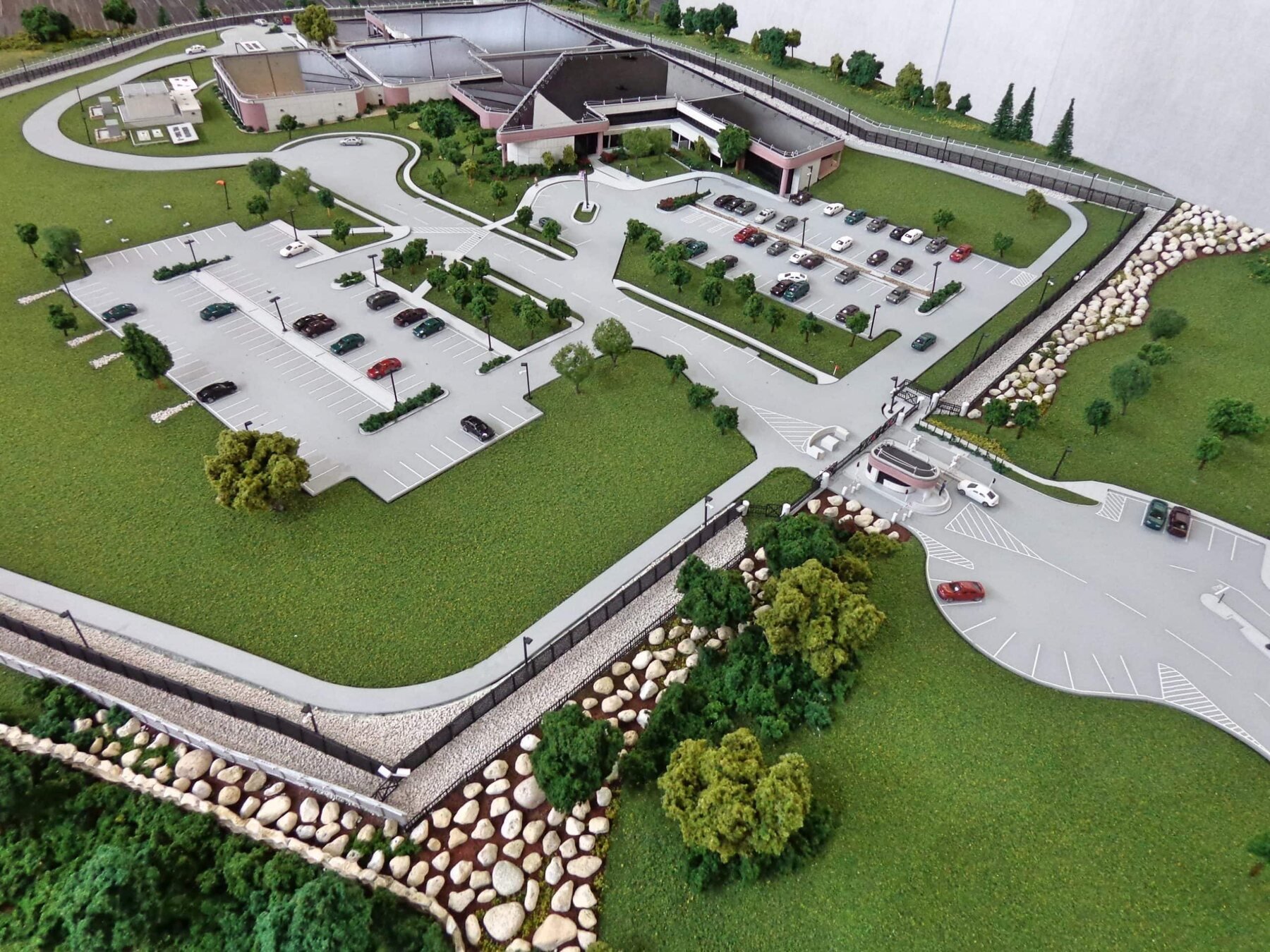
For an example, see our Data Center project. We also have industrial & engineering models in the portfolio.